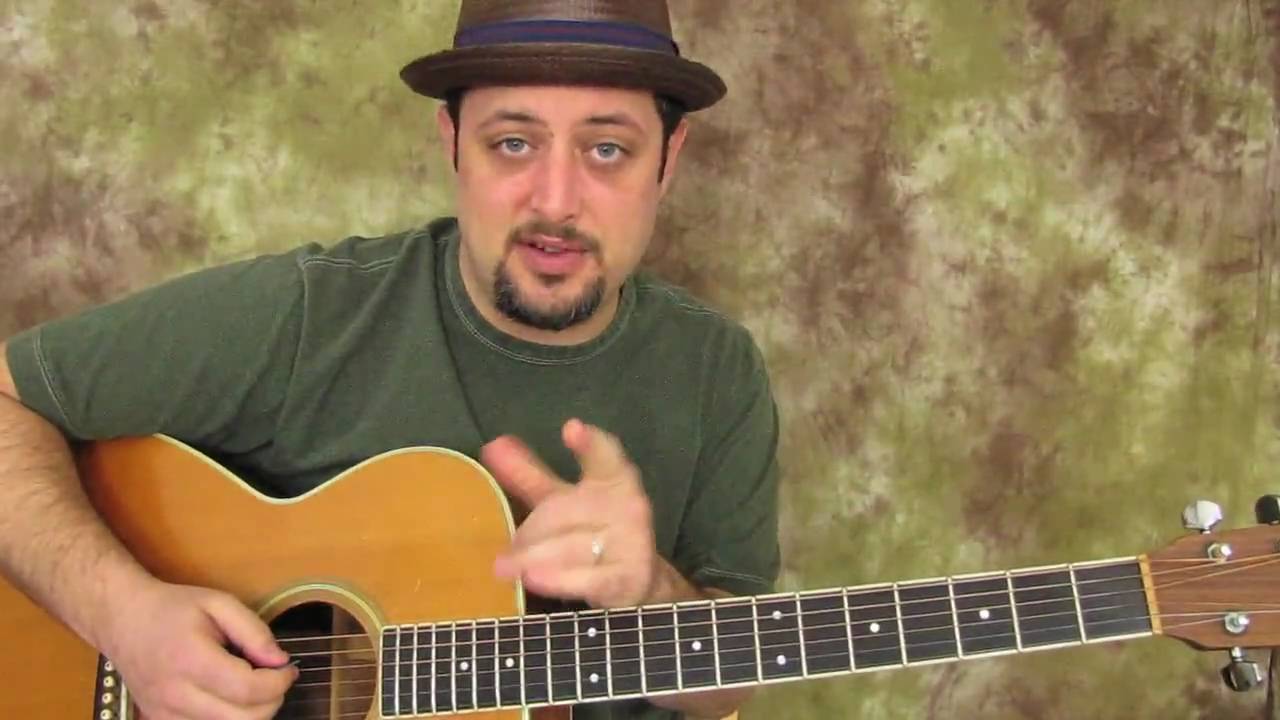
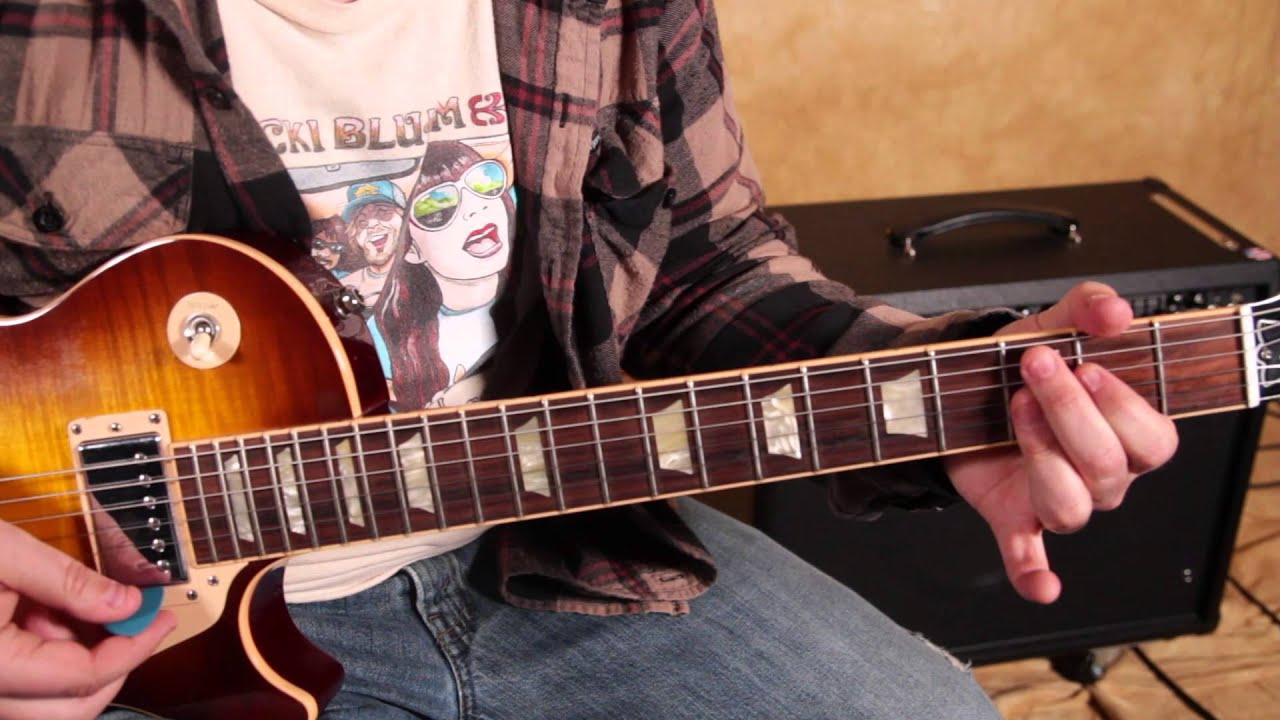
Robert Johnson wrote “Cross Road Blues” on an acoustic guitar in 1936. By 1968, Eric Clapton had turned it into one of the most electrifying four minutes in rock — improvised live on stage at Winterland, no overdubs, no second take. In this lesson, Marty Schwartz breaks down the signature intro riff, the chord moves, and the major/minor pentatonic blending that gives Clapton’s solo its vocal, expressive feel.
Setup: Tuning and Key
Standard tuning. No capo. The song sits in the key of A — think 12-bar blues shuffle in A. Marty approaches the intro and riff from the A minor pentatonic in open position, anchored around the open A string and the second fret area of the middle strings.
The Intro Riff
The riff starts on the open A string. Marty uses his index finger for the fretted notes — though middle finger works too, whatever feels natural. The core shape is open A, then 2nd fret G string, in a 2-0-2 pattern, followed by another open G string, then the 3rd fret A string.
The thing that makes it sound like Clapton — not just the notes — is the microbending. Throughout this whole song, Clapton is applying tiny, barely-there bends. Not a full half-step bend. More like a slight push that makes the note breathe. It gives the guitar that vocal, almost singing quality. Marty flags this early, and for good reason: you can play every note correctly and still miss the feel if you skip the bends.
The harmony on the intro adds a second note — 2nd fret B string alongside the 2nd fret G string. The two strings ring together. Nothing else changes, you just add that second voice to the shape.
The D7 Chord
After the intro repeats, the song moves to a D7 chord. Marty describes it as an “upside down D major” — and that’s a pretty accurate picture of how it sits on the neck.
There’s no rigid strumming pattern here. Clapton plays it loosely — you can hear the strum roll and breathe. On the last strum, the high E string rings out. Then Marty uses the pinky to bend the 3rd fret A string up, back into the main riff.
The E5 Power Chord and Turnaround Lick
The song hits an E5 power chord — open E, 2nd fret A, 2nd fret D — before rolling into a Chuck Berry-flavored turnaround lick. That lick is where it gets interesting.
Marty works from the 4th fret A string (bending slightly for that major flavor), then moves through a sequence on the A and D strings: 4 to 7 on the A, then 5 to 7 on the D. From there he’s in the home-row blues position on A — pull-off from 7 to 5 on the G string, 7 on the D, 5th fret G. The microbending on the 5th fret G string is crucial again. It’s not quite a half step — it’s that slight push on the minor third that makes the note sound vocal instead of stiff.
He also covers a hammer-on move: plant the 5th fret G string, hammer to the 6th fret, then hit the 5th fret B and 5th fret high E. That 6th fret G is the major third of an A7 chord — a chord tone, and the reason the phrase sounds resolved and bluesy at the same time.
Two Ways to Play the Main Verse Riff
Marty shows the main “I went to the crossroads” section in two positions. The first is the open-position approach: open A string, 2nd fret D with a boogie feel, then shift over. The second is the higher position — 5th fret E and 7th fret A for the Chuck Berry boogie, with the pinky up to the 9th fret A. Marty likes this version because it lets him use the octave of the open A and the 7th fret D side by side for the anticipation phrase before the main riff kicks back in.
Neither version is “correct.” Both are in the recording. Learning both gives you more options when you start playing it yourself.
The Solo: Mixing Major and Minor Pentatonic
Marty doesn’t teach a note-for-note solo here — and that’s intentional. This is blues music. It’s built to be improvised. What he does lay out is the conceptual framework Clapton was using.
Clapton mixes A major pentatonic and A minor pentatonic throughout the solo. He’s not fully committing to either — he’s bending toward the minor from major positions and blending the two scales depending on where the chord progression is at.
Here’s the quick rule Marty gives as a starting point:
- Over the A (the I chord) — lean into the A major pentatonic sound
- Over the D (the IV chord) — pull back toward A minor pentatonic
- Over the E (the V chord) — either works
It’s not a rigid theory rule. It’s a feel-based guideline. But it matches what you actually hear Clapton doing on the recording, and it’s a good framework for starting to experiment.
Why It Sounds Like Clapton
The solo on “Crossroads” was improvised live on a single take. No overdubs. Clapton has said in interviews he was never fully comfortable with how celebrated that performance became — he felt it overshadowed more considered work. Which is almost funny, because it’s one of the cleanest examples of what blues guitar can be: instinctive, vocal, and totally committed.
The microbending, the major/minor mixing, the Chuck Berry turnaround vocabulary — all of it comes from deeply internalizing the blues language and then trusting what comes out in the moment. That’s what Marty is pointing you toward when he tells you to improvise your own solo instead of copying the original note for note.
Learn the riff. Get the D7 and E5 under your fingers. Then play through it, mix the pentatonic scales, and let it breathe. That’s the whole point of a song like this.