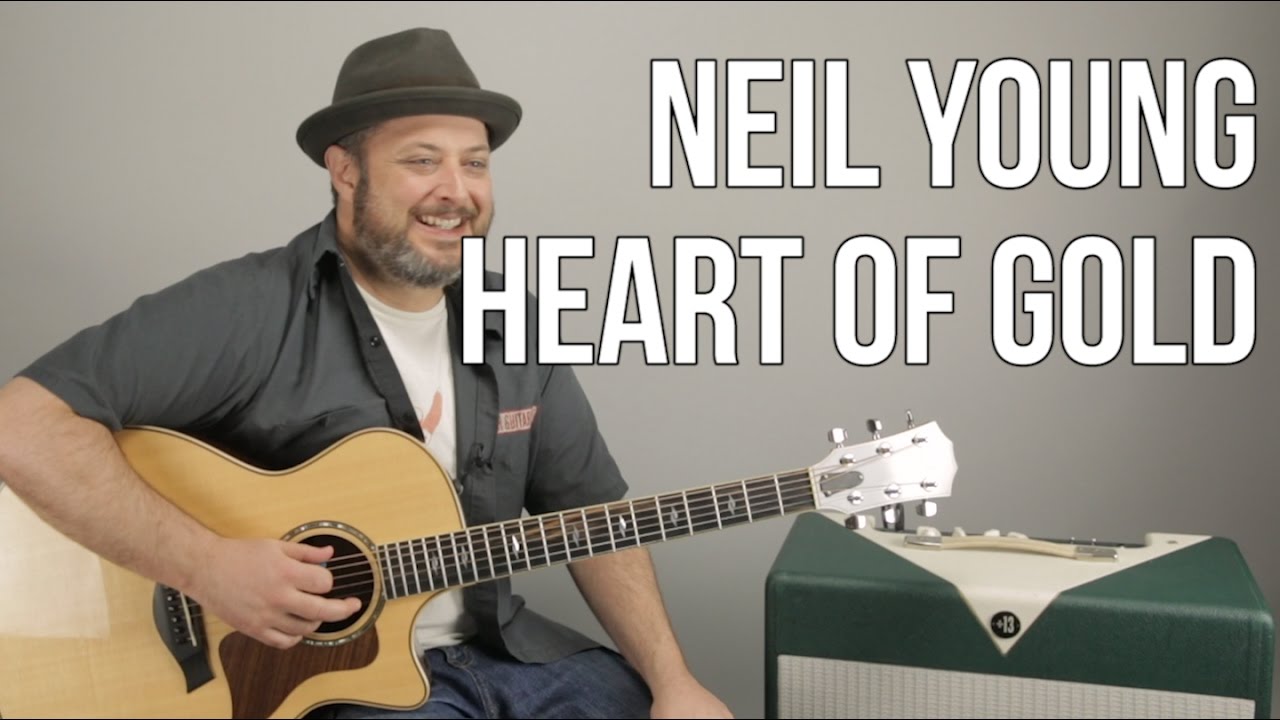
Roy Orbison finished his vocal parts for this song six weeks before he died. The whole album — one of the most effortlessly joyful records ever made — was written and recorded in about ten days. That looseness is still in the music. In this lesson, Marty Schwartz breaks down “End of the Line” by Traveling Wilburys: the sliding intro triads, the open-chord verse progression, and the strumming pattern that holds it all together.
Setup: Standard Tuning, Key of D
No capo, no special tuning. Marty plays this in standard tuning in the key of D. The verse uses three open chords — D, A, and G — which makes this one of the more approachable songs Marty has taught. The intro is the only part that asks anything tricky of your fretting hand, and even that is manageable once you see the shapes.
The Intro: Sliding Triads Over an Open D Drone
This is where the fun is, and also where you’ll need a cutaway if you’re playing a full acoustic. Marty notes you can still do it without one, but the high-fret shapes get tight. The idea is simple: you take three-string triad shapes on the top three strings (high E, B, and G) and slide them up the neck while the open D string rings underneath as a drone the whole time.
Marty starts with a D-shape triad: middle finger on the 7th fret of the high E, ring finger on the 8th fret of the B, and the index on the 7th fret of the G. That’s a G major triad sitting over the open D. He slides that down to a regular open D chord, strums it, and that move sets up the pattern for everything that follows.
From there the sequence builds in steps. Here’s the full progression of triad positions Marty walks through:
- G major triad over D (7th fret high E, 8th fret B, 7th fret G) — slides down to open D
- Same starting shape, then up a whole step to the 9th fret high E, 10th fret B, 9th fret G
- Then an E-shape D major triad: 10th fret high E, 10th fret B, 11th fret G
- Back to the starting shape, up to the A-shape G major triad: 10th fret high E, 12th fret B, 12th fret G
- Slide that whole step to 12th fret high E, 14th fret B, 14th fret G (A over D)
- Finish with D up an octave: 14th fret high E, 15th fret B, 14th fret G
What Marty is doing here is cycling through the same D chord voiced three different ways — D-shape, E-shape, A-shape — as those positions appear up the neck. It sounds like a lot of frets but the movement is organized once you hear it as three familiar barre chord shapes.
The Chords: D, A, and G
Once the intro is done, the rest of the song is open chords all the way through. Marty calls them out simply: D — A — G, with a few variations in the phrasing that follow the lyrics. There’s a recurring move to G and back to D at the line “at the end of the line.”
The verse progression runs through D — A — G — D, and the hook phrase lands on G to D. Marty also points out a brief move to A at the end of certain sections before cycling back. If you know those three chords, you know this song.
The Strumming Pattern
Marty walks through a down-up strumming pattern that gives the song its rolling feel. Written out it goes: down, down, down-up, down-up, down, down-up, down-up — with some variation across the different sections. He counts it as 1-2-3-4 with a 1-2 feel for the G-to-D move at the hook.
The pattern is not strict — Marty plays it fairly loosely, which fits the song. “End of the Line” was recorded by five people having a good time in someone’s home studio. It doesn’t need to be metronomic. Get the basic down-down-down-up shape going and let it breathe.
Why This Song Works on Guitar
George Harrison wrote this one, though all five Wilburys — Harrison, Bob Dylan, Tom Petty, Roy Orbison, and Jeff Lynne — are credited. The whole album came out of ten days of writing and recording in Los Angeles, coffee in the mornings, songs done by midnight, Orbison staying late to tell stories about Sun Records and Elvis. That’s audible in the music. It’s relaxed in a way that most studio records aren’t.
The guitar part matches that spirit. Three chords, open tuning, a strumming pattern you can feel your way through. The intro triads are a little more involved, but they’re the same shapes you already know from barre chord positions — just moved up to the top strings. Once that clicks, the whole song falls into place pretty quickly.
Marty keeps the lesson tight. Work through the intro triads slowly, get the positions under your fingers, then let the open chord section take care of itself. It’s a great song to have in your back pocket.