Wonderwall by Oasis is the ultimate campfire song. It’s become a bit of a joke—”anyway, here’s Wonderwall”—but there’s a reason it’s so popular. The chord shapes are satisfying, the strumming pattern has a great feel, and everyone knows it.
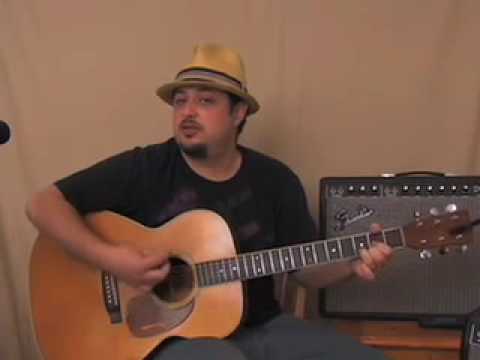
In this Wonderwall guitar lesson, Marty Schwartz breaks down exactly how to play it, from the chord shapes to the strumming rhythm to that iconic walk-down that makes the song instantly recognizable.

What You’ll Need
Capo: 2nd fret
Wonderwall needs a capo on the 2nd fret. This is non-negotiable if you want it to sound like the recording. The capo lets you play simple chord shapes while matching Oasis’s key.
The Secret: Anchored Fingers
Here’s what makes Wonderwall easy once you know the trick: your pinky and ring finger stay anchored on the top two strings throughout the entire song.
Both fingers stay glued to the 3rd fret—pinky on the high E string (relative to the capo), ring finger on the B string. From there, you just move your index and middle fingers around to form different chords.
This anchored fingering is what gives Wonderwall that distinctive, flowing sound. It’s also what makes the chord changes smooth and effortless.
Wonderwall Chords – Verse Progression
The verse uses four chord shapes: Em7 → G → Dsus4 → A7sus4
Em7: With your pinky and ring finger anchored at the 3rd fret on the top two strings, place your middle and index fingers on the 2nd fret of the A and D strings. That’s Em7.
G: Keep those top fingers anchored. Move your middle finger to the 3rd fret of the low E string. Boom—G chord.
Dsus4: Anchored fingers stay put. Index finger goes to the 2nd fret of the G string. Try to avoid hitting the low E string—it sounds muddy if you do.
A7sus4: Still anchored. Index finger on the 2nd fret of the D string, middle finger on the 2nd fret of the G string, right next to each other. Let the open A string ring.
The verse progression goes: Em7 → G → Dsus4 → A7sus4 (repeat this three times, then back to the intro)
The Intro (and Pre-Chorus)
The intro is based on Em7 and D. There’s a little lick you can add, but if you’re a super beginner, you can skip it. The lick is based on the Em7 shape with a hammer-on and the open D string ringing out.
To play the lick:
- Start with Em7 shape
- Hammer-on with your index finger while the chord is ringing
- Let the open D string ring
- Move back to Em7
It’s a small detail, but it adds a lot of character to the intro.
Wonderwall Strumming Pattern
The strumming pattern for Wonderwall is where the magic happens. Here’s the basic pattern:
Down Down Up, Up Down Down, Down Up
But here’s the key: your strumming hand should be moving in a constant up-down motion with the tempo, even when you’re not hitting the strings.
Think of it as: one-and-two-and-three-and-four-and
Your hand moves down on “one,” up on “and,” down on “two,” up on “and,” etc. Sometimes you hit the strings, sometimes you don’t. But your hand never stops moving.
This creates the rhythmic feel that makes Wonderwall groove.
Strumming Pattern Variations
There are slight variations throughout the song. For example, on the A7sus4 chord, there are more upstrokes. But the core rhythm stays the same.
Start with the basic pattern, get comfortable with it, then add variations as you go. Let it evolve naturally.
The Walk-Down (Pre-Chorus)
One of the most recognizable parts of Wonderwall is the walk-down from G to Em7. Here’s how it works:
- Play the G chord (middle finger on 3rd fret of low E)
- Emphasize the bass note
- Walk down by putting your index finger on the 2nd fret of the low E string
- Land on Em7
It’s a small move—literally just sliding one finger down one fret—but it’s what everyone recognizes.
Pre-Chorus Chords
The pre-chorus goes: Cadd9 → Dsus4 → Em7 (twice)
Then on the third time, there’s a walk-down from G to Em7 before hitting A7sus4.
Cadd9: Same shape as the G chord, but move it over so your middle finger is on the 3rd fret of the A string instead of the low E. Top fingers stay anchored, of course.
The pre-chorus has a little rhythm hit you need to pay attention to—there’s a rest or chuck where you mute the strings for an extra punch. Watch Marty’s video for the exact timing.
Wonderwall Chorus Chords
Good news: no new chords! The chorus uses: Cadd9 → Em7 → G → Em7
It’s just a different combination of the same chords you’ve already learned.
Optional: You can play Em7 instead of a regular Em in the chorus for a little extra flair. It’s subtle, but it matches the recording.
Song Structure
Here’s how Wonderwall is laid out:
- Intro (Em7, D lick)
- Verse (Em7, G, Dsus4, A7sus4 x3)
- Pre-Chorus (Cadd9, Dsus4, Em7 progression)
- Chorus (Cadd9, Em7, G, Em7)
- Verse 2 (same as verse 1)
- Pre-Chorus
- Chorus
- Bridge/Outro (same chord progressions)
Once you’ve learned the verse, pre-chorus, and chorus, you’ve got the whole song.
Tips for Playing Wonderwall
- Anchor those fingers. The entire song relies on keeping your pinky and ring finger planted on the 3rd fret of the top two strings. This is the secret sauce.
- Keep your hand moving. Even on missed strums, your hand should be swinging to keep the rhythm. This is crucial for getting the feel right.
- Don’t stress the variations. Get the basic strumming pattern down first. Once that feels natural, you can add the little rhythmic flourishes.
- Practice the walk-down. That G-to-Em7 walk-down is iconic. Nail it.
- Sing along. Wonderwall is as much about the singing as the guitar. Play and sing together from day one.
Why Wonderwall Works So Well
Wonderwall is a perfect beginner-to-intermediate song because:
- The chord shapes are simple (once you know the anchor trick)
- The strumming pattern has a great groove but isn’t overly complicated
- The song builds in complexity gradually
- Everyone knows it, so you get instant recognition
- It sounds great on acoustic guitar
Frequently Asked Questions
What are the Wonderwall chords?
The main chords are Em7, G, Dsus4, A7sus4, and Cadd9. All played with a capo on the 2nd fret, with your pinky and ring finger anchored on the 3rd fret of the top two strings.
Is Wonderwall hard to play on guitar?
No, Wonderwall is actually pretty easy once you understand the anchor finger technique. It’s a great song for intermediate players and even ambitious beginners.
Do you need a capo for Wonderwall?
Yes, you need a capo on the 2nd fret to match the original key and play the chord shapes as written.
What is the Wonderwall strumming pattern?
The basic pattern is: Down Down Up, Up Down Down, Down Up. Keep your hand moving in a constant up-down motion even when you’re not hitting the strings.
What tuning is Wonderwall in?
Standard tuning (EADGBE) with a capo on the 2nd fret.
How long does it take to learn Wonderwall?
Most players can get the basics down in a few hours of practice. To play it smoothly with the strumming pattern and walk-down might take a week or two of regular practice.
Once you’ve got this one down, you’ll understand why it’s such a go-to song. Simple chords, satisfying sound, and everyone knows it. Yeah, it’s a cliché. But it’s a cliché for a reason.
Rock on!