The Crazy Train guitar lesson is a rite of passage for rock guitarists. That opening riff is one of the most recognizable in rock history, and once you nail it, you’ve got instant credibility.
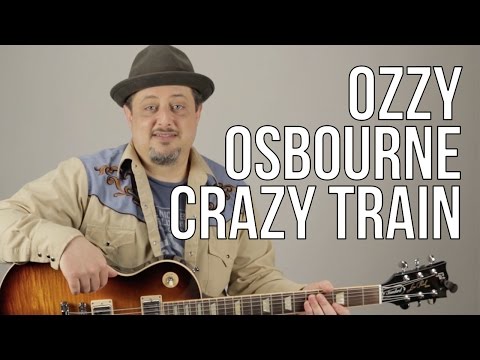
In this lesson, Marty Schwartz breaks down the iconic Crazy Train riff, the rhythm patterns, and the techniques you need to play this Randy Rhoads classic with power and precision.
The Legendary Opening Riff
Let’s start with what everyone came here for: the main riff. This is Randy Rhoads at his finest—a simple yet devastating combination of power chords and single notes that creates pure rock magic.
The progression: F# (F# power chord) → A (A power chord) → E (E power chord)
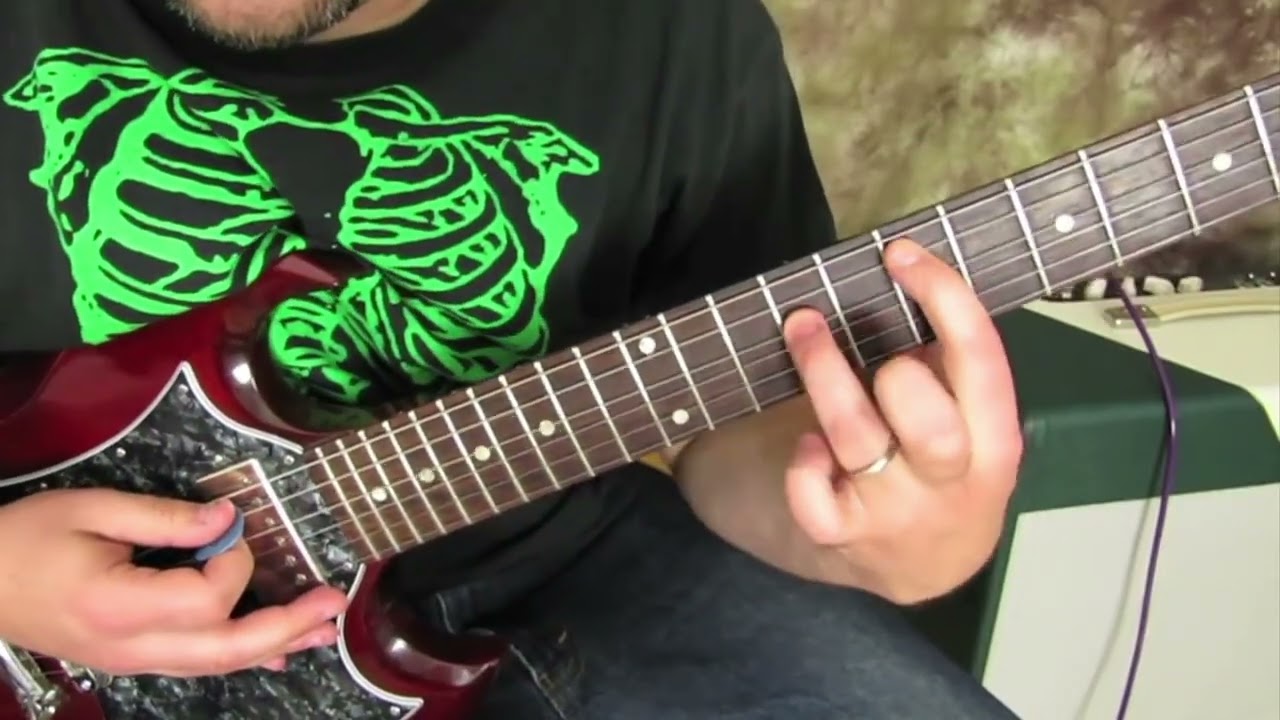
F# power chord: Index finger on the 2nd fret of the low E string, ring finger on the 4th fret of the A string. That’s your F# power chord. Hit it hard.
A power chord: Move up to the 5th fret on the low E string. Same power chord shape. This is your A.
E power chord: Back down to the 2nd fret of the A string with an open E string ringing. Boom—instant Crazy Train.
The key to making this riff sound right is the attack. You’re not gently strumming these chords—you’re hitting them with conviction. Down strokes, tight palm muting on the verses, and a driving rhythm that doesn’t let up.
The Main Riff Breakdown
Here’s where Marty gets into the details, and this is important—past lessons may have had some inconsistencies, but this is the definitive version.
After you play the opening power chord progression, you’re moving into the melodic part of the riff. This is where Randy Rhoads’ classical training shines through.
You’re playing single notes on the A and D strings, creating a melody that weaves through the power chords. The fret positions are precise:
Start on the F# (2nd fret, low E string), then hit the A power chord (5th fret), followed by variations using the open E and notes on the A string. The melody flows naturally if you stay relaxed and let your fingers find the pattern.
Marty emphasizes accuracy here. Every note needs to ring clearly. If you’re muting strings accidentally or your fret hand isn’t positioned correctly, the riff loses its punch.
The Rhythm Pattern
The rhythm is just as important as the notes themselves. Crazy Train has a driving, relentless energy, and that comes from the rhythm guitar work underneath the riff.
You’re playing steady eighth notes with a tight palm mute during the verses. This creates that chugging, locomotive feel that the song is named for.
Palm muting technique: Rest the heel of your strumming hand lightly on the strings right where they meet the bridge. You want to dampen the strings just enough to create a percussive, chunky tone—not so much that they sound dead, but enough to tighten up the sound.
When you hit the chorus or breaks in the riff, open it up. Let those power chords ring out. The contrast between the tight, muted verses and the open chorus is what gives Crazy Train its dynamic punch.
The Chord Progression
Beyond the main riff, Crazy Train uses a straightforward power chord progression that’s easy to follow once you’ve got the main riff down.
The verse and pre-chorus sections use the same F#, A, and E power chords, just in different rhythmic patterns. Randy Rhoads was a master at taking simple chord progressions and making them sound epic through rhythm, dynamics, and tone.
Pay attention to when Marty shifts between single-note riffs and full power chords. That’s the secret sauce. It’s not just power chords the whole time—Randy weaves melody and rhythm together seamlessly.
Variations and Embellishments
There are slight variations throughout the song. In some sections, Randy adds extra notes or changes the rhythm slightly to keep things interesting.
For example, there’s a section where the A power chord is emphasized more, and the melody on top shifts to include different fret positions. These variations keep the song from feeling repetitive, even though the core riff stays the same.
Don’t stress about getting every single variation perfect on your first run-through. Master the main riff first, then add the embellishments as you get more comfortable.
Tips for Playing Crazy Train
- Nail the power chords. If your power chords are sloppy, the whole riff falls apart. Make sure both notes ring clearly.
- Palm muting is essential. Too much and it sounds dead. Too little and it sounds messy. Find the sweet spot.
- Use a metronome. Crazy Train has a tight, driving rhythm. Practice with a metronome to keep your timing locked in.
- Tone matters. Randy Rhoads used a mid-heavy tone with plenty of gain. If you’ve got an amp with a drive channel, crank it up. If not, a distortion pedal will get you there.
- Downstrokes for power. The main riff uses primarily downstrokes. This gives it that aggressive, punchy attack.
Why Crazy Train Works
Crazy Train is one of those riffs that’s both simple and genius. It’s not technically difficult—intermediate players can nail it with some practice—but it sounds massive.
Randy Rhoads understood how to write riffs that were memorable, powerful, and fun to play. The combination of power chords and melodic single notes creates a riff that’s instantly recognizable and endlessly satisfying.
Plus, once you’ve got Crazy Train down, you’ve got a song that will impress at any jam session or guitar store. It’s a crowd-pleaser for a reason.
Common Mistakes
Rushing the tempo: Crazy Train has a fast feel, but don’t rush it. Keep it steady. Use a metronome if you’re speeding up.
Weak power chords: Both notes in the power chord need to ring clearly. If one string is muted or buzzing, go back and clean it up.
Inconsistent palm muting: Your palm mute needs to stay consistent throughout the riff. Don’t let it get sloppy.
Ignoring dynamics: The song has loud and quiet parts. Don’t play everything at full volume—use dynamics to create interest.
Frequently Asked Questions
What tuning is Crazy Train in?
Crazy Train is played in standard tuning (EADGBE). No alternate tunings required—just plug in and go.
Is Crazy Train hard to play on guitar?
Crazy Train is intermediate difficulty. The main riff uses power chords and single notes that aren’t technically difficult, but the speed and precision required take practice. It’s a great song for building technique.
What are the chords for Crazy Train?
The main progression uses F# power chord (2nd fret, low E), A power chord (5th fret, low E), and E power chord (open E with 2nd fret on A string).
What guitar did Randy Rhoads use on Crazy Train?
Randy Rhoads played a custom white Gibson Les Paul with black hardware and pinstripes on the Blizzard of Ozz album. He’s known for his Les Paul and later his Jackson Rhoads V models.
Do I need a lot of distortion for Crazy Train?
Yes, Crazy Train needs a good amount of gain to get that heavy, saturated tone. Randy Rhoads used Marshall amps cranked up with plenty of mid-range presence. A high-gain distortion or overdrive pedal will get you in the ballpark.
Can you play Crazy Train on acoustic guitar?
You can play the riff on acoustic, but it won’t have the same power and punch without distortion. Acoustic works for practice, but this is an electric guitar song through and through.
Crazy Train is a must-learn for any rock guitarist. Once you’ve got the main riff down, you’ll understand why it’s been a staple of rock radio for over 40 years. It’s simple, powerful, and unforgettable.
Rock on!