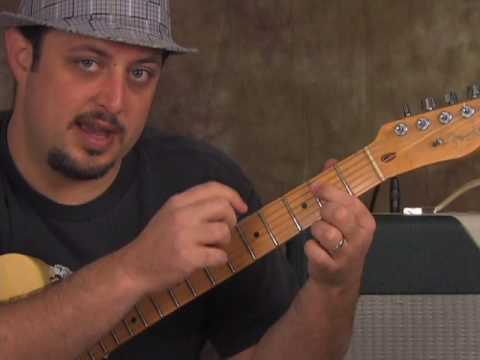
This Seven Nation Army guitar lesson will teach you one of the most recognizable riffs in rock history. The White Stripes’ massive hit from 2003 features that unforgettable bass-like main riff that’s actually played on guitar through an octave pedal. What makes this song so appealing to learn is its deceptive simplicity – the main riff uses just one string, but the full song incorporates power chords, rhythm techniques, and dynamic shifts that will challenge your timing and feel. You’re getting a complete rock guitar workout wrapped up in an instantly recognizable tune that sounds great whether you’re playing it solo or with a band.

What You’ll Learn
- The iconic main riff played on the E string with proper timing and feel
- Power chord progressions in the verse and chorus sections
- Palm muting technique for the driving rhythm parts
- Dynamic control between the quiet verses and explosive choruses
- How to recreate the octave pedal sound with standard guitar techniques
- Proper fretting hand positioning for clean single-note playing
Song Story & Context
Jack White recorded “Seven Nation Army” using a semi-acoustic guitar run through an octave effects pedal, which dropped the pitch down to create that deep, bass-like sound. The riff came to him during a sound check, and he knew immediately it was special. What’s fascinating is that White played this on a 1950s Kay Hollowbody guitar, not some high-end instrument, proving that great tone comes from the player and the idea, not expensive gear.
The song became The White Stripes’ biggest hit, reaching the top 10 in multiple countries and winning a Grammy. But beyond chart success, the main riff has taken on a life of its own – you’ll hear crowds chanting it at sporting events worldwide, from World Cup matches to NFL games. It’s become a cultural phenomenon that transcends the original recording.
Chord Progression Breakdown
The main riff centers around E minor, but it’s not your typical chord progression. The famous opening line moves: E-E-G-E-D-C-Bb-Bb. You’re playing this on the low E string, starting at the 7th fret for that first E note. The beauty is in the simplicity, but getting the timing and feel right takes practice.
For the verse sections, you’ll use power chords built around Em, C, and G. Keep your fretting hand relaxed and focus on clean chord changes. The Em power chord sits at the 7th fret on the A and D strings, which connects nicely with where you’re already playing the main riff.
The chorus explodes with full Em, C, and G chords. This is where the song opens up dynamically. Practice moving between these shapes smoothly – the transition from Em to C can be tricky at first since you’re shifting your entire hand position down the neck.
Common Chord Fingering Issues
Watch your thumb placement behind the neck when playing the main riff. Keep it low and behind the 6th or 7th fret area. This gives your fingers better leverage and prevents you from accidentally muting the string. When you switch to power chords, your thumb can move up slightly to give you more power for the fuller sound.
Strumming Pattern & Rhythm
The main riff isn’t strummed – it’s picked as single notes with a strong, deliberate attack. Think of it as making a statement with each note rather than just playing a melody. The timing has a slight swagger to it, not perfectly robotic.
For the chord sections, you’ll want a driving eighth-note feel with heavy downstrokes. The White Stripes’ style is raw and powerful, so don’t worry about being too polite with your strumming. Attack those strings like you mean it, especially on the chorus sections.
Palm muting plays a huge role in getting the right feel. Rest the side of your picking hand lightly on the strings near the bridge. This creates that chunky, percussive sound that drives the rhythm forward. Experiment with how much pressure you apply – too light and you won’t hear the effect, too heavy and you’ll kill the sustain completely.
Tips for Playing This Song
Start slow with the main riff. That iconic melody needs to be rock-solid before you worry about anything else. Play it with a metronome at a comfortable tempo and gradually speed up. The timing has a slight swing to it that you’ll only capture by playing it over and over until it becomes second nature.
Use your pinky for the higher frets. When you hit that G note at the 15th fret in the main riff, resist the urge to stretch your first finger up there. Walk your fingers up the neck and use your pinky. It might feel awkward at first, but it’s much more efficient and will sound cleaner.
Don’t overplay the effects. If you have an octave pedal, great, but the song works perfectly fine without it. Focus on your tone and attack instead of trying to recreate the exact studio sound. A little bit of overdrive and solid playing technique will get you 90% of the way there.
Practice the dynamics. This song lives and dies on the contrast between the quieter verses and explosive choruses. Work on controlling your volume and intensity with your picking hand. The verses should feel restrained and building, while the choruses should feel like you’re letting loose.
“Seven Nation Army” proves that sometimes the simplest ideas are the most powerful. Take your time with this one and focus on making each section feel distinct. Once you’ve got it down, you’ll have learned one of the most recognizable guitar parts ever recorded, plus some valuable techniques you can use in countless other songs.