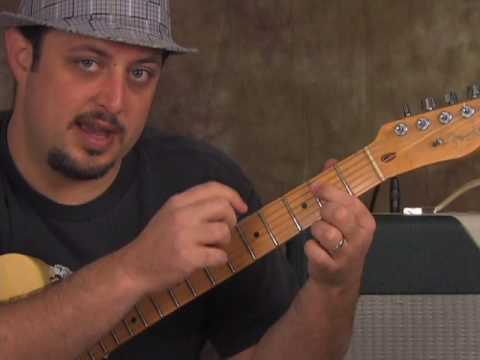
This Don’t Look Back In Anger guitar lesson breaks down one of Oasis’s most beloved anthems. Noel Gallagher crafted something special here – a song that sounds deceptively simple but packs some interesting chord work and subtle techniques that make it really shine. You’ll get to work with some great barre chords, practice smooth transitions, and nail that distinctive strumming pattern that drives the whole track forward.

Song Story & Context
Noel Gallagher wrote “Don’t Look Back In Anger” after a heavy night of drinking, inspired by John Lennon’s “Imagine” and The Beatles’ influence on his songwriting. The track became Oasis’s biggest hit, reaching number one in the UK and becoming an unofficial anthem for an entire generation. What makes this song particularly interesting from a guitar perspective is how Noel layers relatively simple chord progressions to create something that sounds much more complex. He recorded it using his Gibson Les Paul through a Marshall stack, but it translates beautifully to acoustic guitar as well.
What You’ll Learn
- Essential barre chord shapes including F major and G major variations
- Smooth chord transitions between C, G, Am, and F progressions
- The distinctive down-up strumming pattern that gives the song its drive
- How to handle the tricky F to G change in the chorus
- Proper fingerpicking technique for the intro section
- Timing tips for the chord changes during the “So Sally can wait” section
Chord Progression Breakdown
The verse progression centers around C – F – C – F – C – Am – G. Start with your C major chord in the open position – first finger on the first fret of the B string, second finger on the second fret of the D string, third finger on the third fret of the A string.
The F major barre chord trips up a lot of players. Place your first finger across all six strings at the first fret, then add your second finger to the second fret of the G string, third finger on the third fret of the A string, and fourth finger on the third fret of the D string. Keep your thumb positioned behind the second fret of the neck for support.
For the Am chord, you’re back in comfortable territory with an open chord. The G major that follows can be played as either an open G or a barre chord at the third fret – I recommend the open G for smoother transitions.
The chorus shifts to F – G – C – Am – F – G – C. This F to G change is where many players stumble. Practice moving your barre chord from the first fret to the third fret while keeping your finger pressure consistent. Don’t lift your fingers too high off the strings during the transition.
Strumming Pattern & Rhythm
The strumming pattern follows a down-down-up-up-down-up rhythm that repeats throughout most of the song. Count it as “1-2-and-3-and-4-and” with the downs on 1, 2, and the “and” of 3, and ups on the remaining beats.
During the verse, keep your strumming relaxed and let some strings ring out between chord changes. The magic happens in the spaces between the strums, so don’t rush it. When you hit the chorus, you can attack the strings with a bit more energy to match the song’s building intensity.
Pay special attention to the rhythm during “So Sally can wait, she knows it’s too late.” The chord changes happen on specific syllables, and getting this timing right makes all the difference. Practice singing along while you play to internalize where those changes fall.
Tips for Playing This Song
Work on your barre chords separately. If you’re struggling with the F major barre chord, spend time building up your finger strength. Practice holding the chord for 30 seconds at a time, then gradually work up to a minute. Your hand will get stronger, and the chord will start to ring clearly.
Focus on clean chord transitions. The song’s beauty lies in how smoothly one chord flows into the next. Practice changing between C and F slowly, making sure each note rings clearly before speeding up. Use a metronome set to 60 BPM and gradually increase the tempo.
Don’t overthink the strumming. Many players get caught up trying to make their strumming pattern exactly match the recording. Focus on keeping steady time and hitting the chord changes correctly. The strumming will naturally fall into place once you’re comfortable with the chord progression.
Listen for the subtle palm muting. Noel adds slight palm muting during some sections to control the sustain. Rest the side of your picking hand lightly on the strings near the bridge to achieve this effect. It’s subtle but adds texture to your playing.
Take your time with this one and don’t get frustrated if the barre chords don’t come immediately. “Don’t Look Back In Anger” rewards patience and practice. Keep working through the video lesson, and you’ll have this Oasis classic under your fingers in no time.